Just as every other organism in this universe, we human beings are also whole. I would simply define the idea of “wholeness” as lacking nothing, to be in a state of completeness and acceptance. Although fortunately for all other species, they are not capable of experiencing a way of being outside of their instinctive and pure form, being one that is whole. On the other hand, human beings possess a level of consciousness which facilitates the ability to escape our wholesome nature, and to wander into a world of creation, one in which we are convinced that wholeness must be reached externally. This is a world run by ego, rather than being, a world that builds on a given identity or better known as personality. It is in this world that, we have created constructs such as time, one of many systems that helps to alleviate the sense of uncertainty, allowing humans to have a framework of understanding. I say all this to assert that the primary reason that humans feel a lack of wholeness is due to a lack of awareness of our naturalistic being. It is our relentless need for identification and the development of ego that imprisons us in a world that cannot truly attain wholeness, but only experience glimpses.
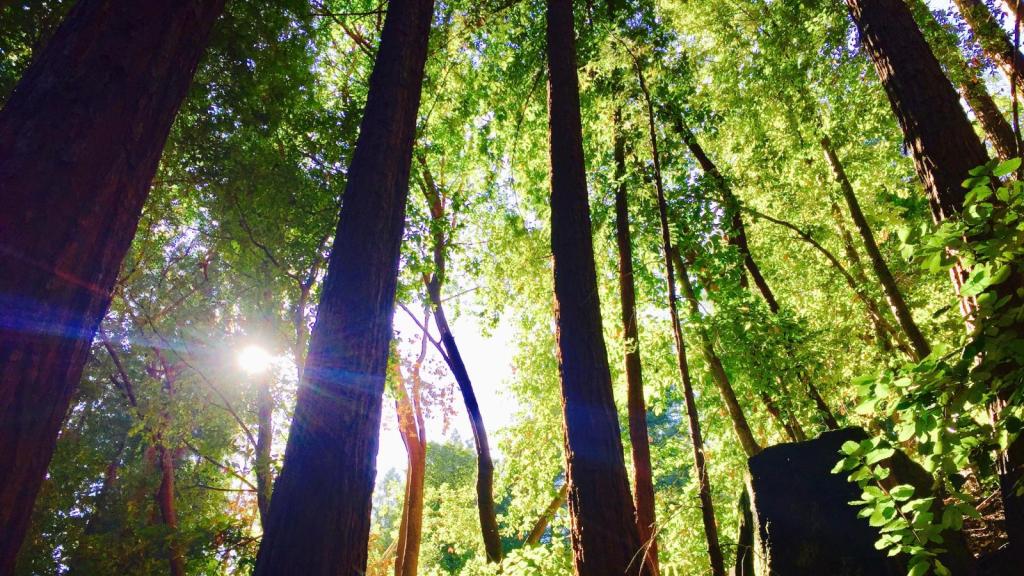
“The Art of Being: A state of wholeness in which the mind functions freely and easily, without the sensation of a second mind or ego standing over it with a club”
Alan Watts
These fleeting moments of being, can be most accurately described by what Abraham Maslow referred to as “Peak Experiences.” It is in these moments that, there is a total absorption of the happening, transcending the ego and all constructs of “reality.” One of the best examples is observed in love, where the ecstasy of the moment seems to plunge the lovers into a realm beyond space and time, an experience that is complete and immersive. Now, I would say that a peak experience such as love is a higher form example, given that it is a synergistic force. A more common form could simply be taking a walk or being in nature in which you are enthralled by the moment to the degree that the feeling of wholeness is reached, a point where the mind is no longer active. This is to say, wholeness is a function of internal acknowledgment of the ubiquitous happening. Meaning, no matter the good or bad, light or dark, wholeness is an art of constant acceptance and embracing of the now, regardless of the particular feeling.
“Wholeness is not achieved by cutting off a portion of one’s being, but by integration of the contraries”
Carl Jung
This seems to be one of the more challenging facets of living in a holistic manner, to recognize and implement those hidden areas of our being that we tend to push away. There are distinct characteristics that many would say are “evil” or that represent the darkness within, which most do not want to embody or identify with. Moreover, they are resisting what it means to be whole. It is common to mistake the integration of these dark elements of our being with the execution of them, but rather; I would say it is the relationship and acceptance of them that establishes a connection as well as control. Carl Jung often referred to this dimension of the psyche as “the shadow.” He writes, “Everyone carries a shadow, and the less it is embodied in the individual’s conscious life, the blacker and denser it is.” With this said, it is in our best interest as whole human beings to acknowledge those thoughts and areas of our mind that we tend to reject, in order to move in the direction of health and well-being.
“The wholeness and freedom we seek is our true nature, who we really are”
Jack Kornfield
In conclusion, what I have found to be most valuable and insightful is the realization that all we seek can be found in the depths of our being, that; all power lies in the individuals ability to look within, to connect and to adhere to ones uniqueness. It is in the acceptance of all the characteristics of our being that we can live holistically and find tranquility outside of the bounds of culture and society. There can be a balance of ego and being in which one can still navigate the social world and interact within it without being consumed by it. This oneness we are searching for is nothing but the awareness of it; it can not be actively pursued, but rather consciously observed in the abundance of presence. Our nature is far more simplistic than we make it out to be. It is an experience and so to live it authentically we must embrace it fully. There is no effort or striving that is necessary to be in the moment. The way of being is nothing more than the acceptance of all the arbitrary happenings, to be detached yet connected, this is wholeness.
 Infinite Seeking
Two things that you wrote jumped out at me.
“It is our relentless need for identification and the development of ego that imprisons us in a world that cannot truly attain wholeness,”
The other is, “what I have found to be most valuable and insightful is the realization that all we seek can be found in the depths of our being, that; all power lies in the individuals ability to look within, to connect and to adhere to ones uniqueness,”
Do you believe it is possible that the world that ego development imprisons us in could lead to specific forms of ego expression, such as vanity and if so, what can we do when we look within to avoid such destinations of ego expression? If I look within myself and I express humility, which is a good thing, what could keep me from looking within and it leading to say, arrogance, when I compare myself to the outside world?
LikeLike
human is “whole”?. “wholeness” = lacking nothing = in a state of completeness and acceptance? no way that’s true. by that definition, we human are perfect. danggg.. can’t agree to that. nopee.
is it not we are lacking in lots of things? there’s always that void in us that make us felt uneasy. the need for love. the need for guidance. the need for acceptance. the need for safety. the need for stability. the need of tons of things.
that’s us. the degrees defer from person to person but those elements are there, within us. that lack of something nature and our journey to try and fill the gap makes us what we are.
LikeLike